
How Chelsea Commuters Use the Silver Line |
The Silver Line SL3 connects Chelsea commuters to Logan Airport, the Seaport, South Station, and Greater Boston, making it one of the city’s most important transit routes. |
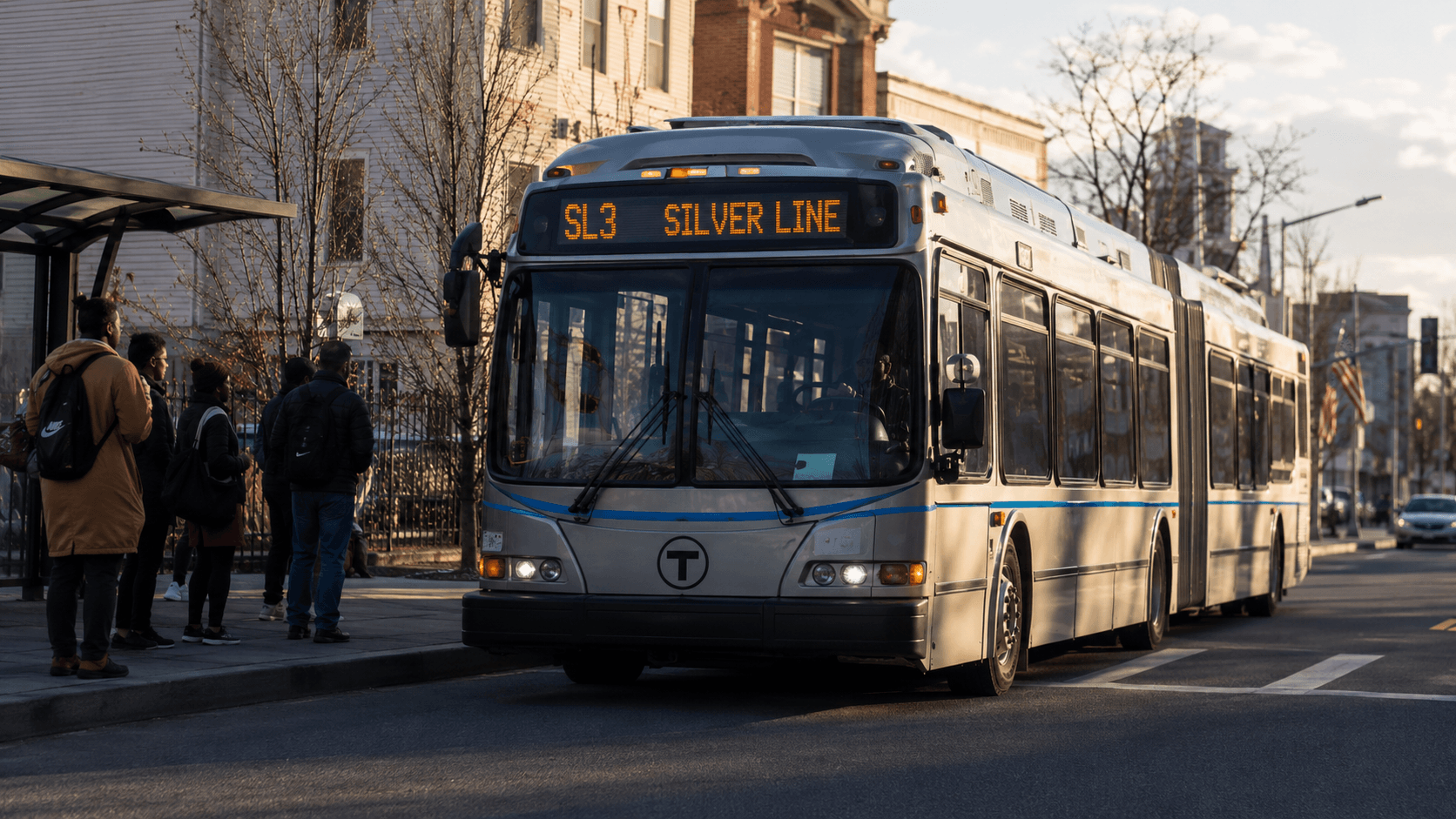
For many Chelsea residents, the Silver Line SL3 is not just another transit route. It is part of the daily rhythm of commuting, airport trips, school routines, medical appointments, shopping, and getting into Boston without needing to drive.
The route gives Chelsea a direct connection to some of Greater Boston’s busiest destinations, including Logan Airport, the Seaport, and South Station. For commuters, that matters. A ride that begins in Chelsea can lead to offices in the Seaport, a Red Line connection at South Station, a commuter rail transfer, an Amtrak trip, a regional bus, or a flight out of Logan.
Chelsea’s Silver Line access is built around four local stations: Chelsea Station at Everett Avenue, Bellingham Square Station at Arlington and Sixth Street, Box District Station at Gerrish Avenue and Highland Street, and Eastern Avenue Station at Eastern and Central Avenue. Those stops give different parts of the city a way onto the route. Chelsea Station connects riders near Mystic Mall and commuter rail. Bellingham Square serves the historic downtown area. Box District reaches a growing residential neighborhood. Eastern Avenue sits near Chelsea Creek and is the last Chelsea stop before the route heads toward East Boston and beyond.
A Route Built Around Daily Life
The SL3 is especially useful because it serves more than one kind of rider. For airport workers and travelers, it provides a Chelsea-to-Logan connection. For Seaport employees, it offers a direct path toward one of Boston’s major job centers. For residents heading beyond the waterfront, South Station opens the door to the Red Line, commuter rail, Amtrak, and regional buses.
The Seaport connection is one of the biggest reasons the route matters for Chelsea commuters. The Seaport TMA transit guide notes that the Silver Line Waterfront routes serve South Station, Courthouse Station, World Trade Center Station, and Silver Line Way before branching. That means Chelsea riders using the SL3 can reach key Seaport stops without first traveling through downtown by car.
The route also supports a more flexible way of moving around the region. A Chelsea resident might use the SL3 to get to work during the week, to reach Logan for a weekend flight, or to connect at South Station for a longer trip. For a compact city where many households rely on transit, that flexibility is important.
What Riders Should Know
The MBTA’s official SL3 page currently describes the route as Silver Line SL3 and lists service as every 15 minutes or better. Because transit details can change, riders should check the official MBTA route and fare pages before leaving to confirm schedules, service alerts, delays, and current prices.
One local detail worth remembering is the Chelsea Street Bridge. Discover Chelsea’s transportation guide notes that bridge lifts can cause road delays on the return trip from the airport. That does not make the SL3 any less useful, but it does mean riders should build in extra time when timing is important, especially for flights, work shifts, appointments, or tight transfers.
The SL3’s Chelsea connection also has a larger regional story. WBUR reported that the route began serving Chelsea in 2018, linking the city with South Station, the airport in East Boston, and the Seaport District. More recently, MassDOT and the MBTA have studied extending SL3 service beyond Chelsea toward Sullivan Square, which would create a stronger connection to the Orange Line if the project advances. A 2024 CommonWealth Beacon report described the Sullivan Square extension as a recommended project that still needed funding at that time. A later City of Everett update said Everett and the MBTA were moving forward on Silver Line extension design work.
For now, the value of the SL3 is already visible in everyday life. It gives Chelsea residents a practical connection to jobs, flights, schools, shopping, appointments, and other transit lines. It also helps link Chelsea more closely to the economic activity of Boston, East Boston, and the Seaport.
For commuters, the route is not perfect, and planning still matters. But for a city that depends on strong regional connections, the Silver Line remains one of Chelsea’s most important transportation tools. |
0 Comments
Join the conversation
Be the first to comment
Share your thoughts above.