Chelsea’s Waterfront Future Gets a $1.75 Million Boost |
State Rep. Judith Garcia secured $1.75 million in House-approved funding for Chelsea environmental justice work, Mill Creek improvements, and public access to Chelsea Creek. |
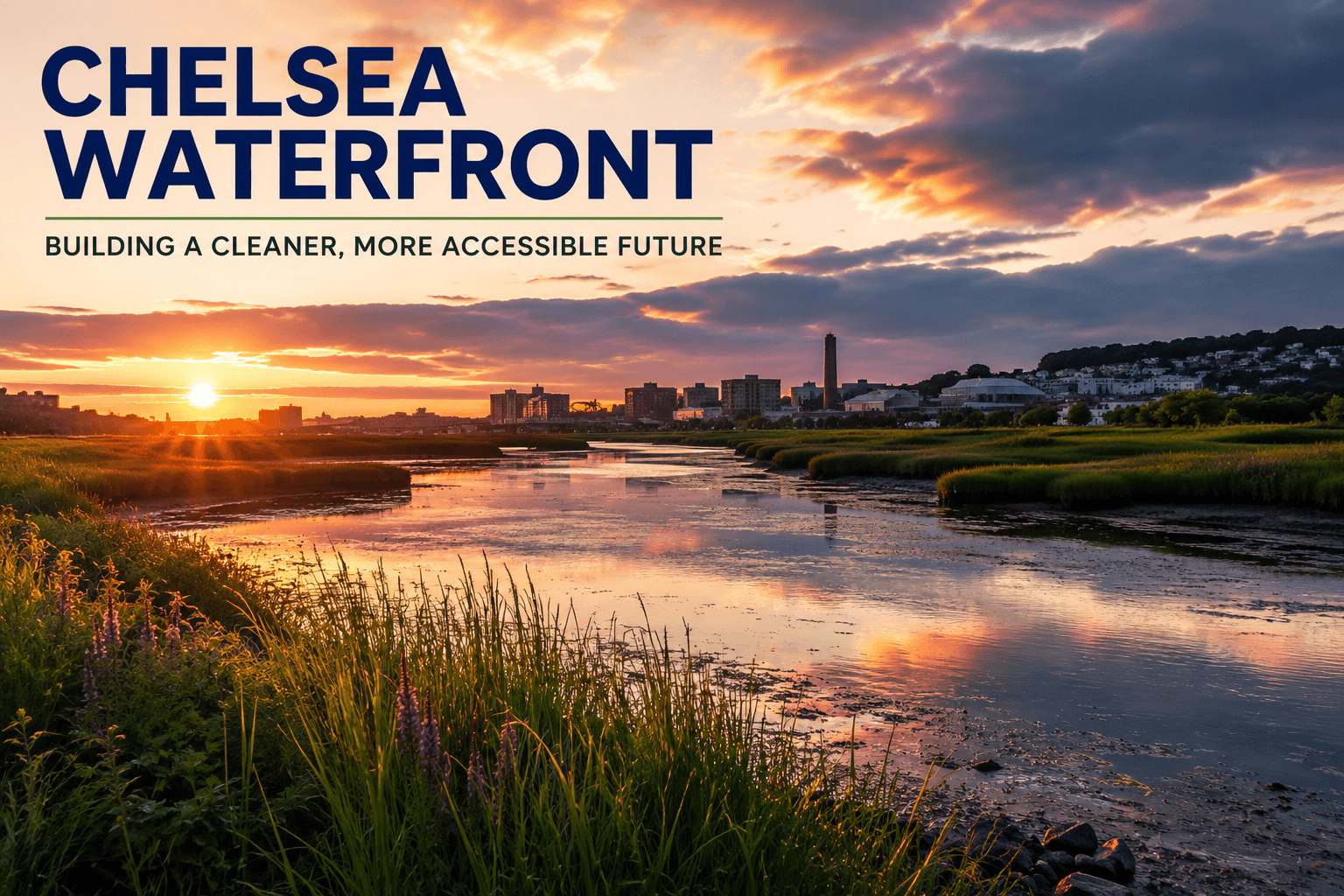
Chelsea’s waterfront has always been part of the city’s identity, but for many residents, access to that waterfront has been limited by industry, infrastructure, and long-running environmental burdens. A new state-level funding package now gives Chelsea a reason to look ahead with cautious optimism.
According to the Chelsea Record’s original report, State Representative Judith Garcia secured $1.75 million in Chelsea-focused investments in the House version of An Act to Build Resilience for Massachusetts Communities, a major environmental bond bill. The local package includes $500,000 for environmental justice initiatives in Chelsea, $250,000 for trail and wetland ecosystem improvements along Mill Creek, and $1 million for GreenRoots to support public access to the Chelsea Creek waterfront.
The funding is not just about landscaping or beautification. In Chelsea, where residents have organized for years around clean air, open space, climate resilience, and public health, the proposal connects directly to everyday quality of life. Mill Creek is one of the city’s most important natural areas, and the City of Chelsea describes it as Chelsea’s largest salt marsh, part of the Mystic River watershed, and a waterway surrounded by busy roads, industrial areas, and residential neighborhoods that have faced lasting pollution impacts. The city’s planned improvements include a waterfront boardwalk, debris removal, invasive species removal, and native planting.
Chelsea’s climate resilience work is already broader than one project. The city says it works with Revere and Winthrop through the North Suffolk Office of Resilience and Sustainability on issues such as sea-level rise, flooding, extreme heat, energy use, waste reduction, and livability. Chelsea also says it is working with GreenRoots, Mystic River Watershed Association, and The Nature Conservancy on a long-term effort to restore Mill Creek’s ecology and reconnect residents to the waterfront.
The $1 million for GreenRoots is tied to one of the most closely watched waterfront efforts in the city: the future of the former Forbes Lithograph Manufacturing Company property. Mass Audubon says it, GreenRoots, and The Neighborhood Developers are working on a shared vision to transform 18 acres of Chelsea waterfront land into a broadly accessible, climate-resilient park, mixed-income housing, and community amenities along Chelsea Creek. The property sits at the confluence of Chelsea and Mill Creeks and has been fenced off from the public for nearly two decades, according to Mass Audubon.
The project’s public-facing Chelsea Creek Sanctuary page makes clear that this is still a long-term effort. The site is not currently open to the public, and the project partners say public safety must come first because abandoned buildings and hazardous materials make the property unsafe. The site says demolition and debris removal are planned to begin in 2027, with trails and recreational features expected to follow.
Another notable piece of the House bill is the creation of a special commission on Commonwealth port development, with Chelsea Creek included among the designated port areas named in the bill language. The commission would be tasked with recommending a statewide strategic vision for ports and considering issues such as environmental justice impacts, public health impacts, land use, water use, open space, and affordable housing opportunities in host communities.
The bill also includes air-quality language that could matter for communities like Chelsea. The House-amended text calls for an air quality advisory committee that includes representatives from community-based or environmental justice organizations. The committee would be required to identify likely air pollution hot spots caused by high concentrations of traffic- and industry-related air pollution across Massachusetts.
What Happens Next
Residents should understand that this is not a finished project announcement. The Massachusetts Legislature’s bill history shows that the House passed the amended bill on June 17, 2026, by a vote of 151–0. The Senate non-concurred in the House amendment on June 23, 2026, and a conference committee was appointed. That means Chelsea’s items have advanced through a major House step, but the final bill still depends on the legislative process.
For Chelsea, the promise of this funding is larger than the dollar amount. It represents state attention to places where residents have long asked for cleaner air, safer waterfront access, restored wetlands, more green space, and a stronger voice in what happens along the water’s edge. If the funding survives the final legislative process, it could help move Chelsea closer to a waterfront that is healthier, more accessible, and more reflective of the community that has fought for it. |
0 Comments
Join the conversation
Be the first to comment
Share your thoughts above.