
Why Chelsea’s Heat Problem Doesn’t End When the Weather Breaks |
Chelsea residents face rising summer heat risks as the city works on cooling centers, splash pads, tree canopy, and neighborhood-level heat solutions. |
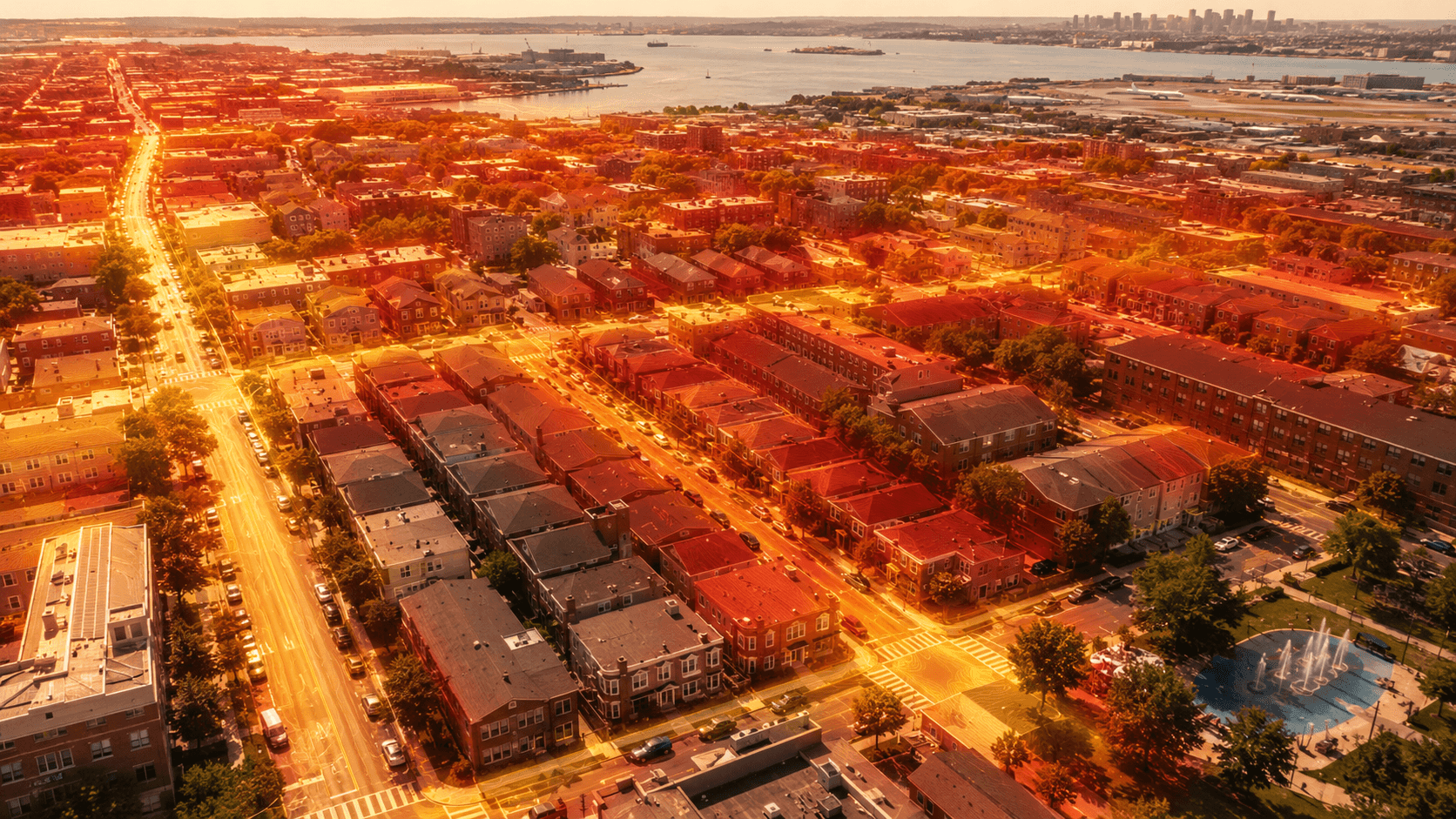
Chelsea residents know that summer heat can feel different here. It is not just the number on the forecast. It is the way heat settles into pavement, rooftops, sidewalks, triple-deckers, and apartment buildings — and how long it can linger after the sun goes down. A new CommonWealth Beacon report, “When the heat doesn’t stop,” puts a spotlight on Chelsea’s ongoing challenge: how to keep residents safe as extreme heat becomes a bigger part of daily life.
The report focuses on the work of GreenRoots and local climate advocates who are trying to expand shade, protect young trees, and make cooling resources easier to reach. CommonWealth Beacon describes Chelsea as one of the hottest cities in Massachusetts, noting that dense housing, limited room for trees, pavement, asphalt, and rooftops all contribute to heat that builds during the day and releases slowly at night.
For residents, that can turn a hot week into more than an inconvenience. Chelsea’s own Beat the Heat page says several areas of the city can be 6 degrees hotter than surrounding areas because of the urban heat island effect. The city says that higher heat creates greater risk for young children, seniors, and people with chronic health conditions, especially during extreme heat days.
Trees Are More Than Decoration
One of the main takeaways from the CommonWealth Beacon story is that trees are not just beautification. In hot neighborhoods, they function as cooling infrastructure. The article highlights GreenRoots’ TreeKeeper program, which trains Chelsea residents to care for and expand the urban tree canopy. CommonWealth Beacon reported that the program has grown to about 80 volunteers maintaining more than 200 trees.
That work matters because shade is not evenly distributed. Research from Wicked Hot Mystic found that areas with more tree cover, green space, and nearby water were up to 10 degrees cooler than areas with more pavement and concrete. The project was conducted with partners including the Museum of Science, Mystic River Watershed Association, Metropolitan Area Planning Council, GreenRoots, and more than 80 volunteers.
CommonWealth Beacon also reported that federal funding cuts have affected some of this work. According to the report, the TreeKeeper program was funded in part by a $500,000 EPA Environmental Justice Collaborative Problem-Solving grant that was later rescinded, forcing the broader program to scale back and slowing planned work in Chelsea and nearby communities.
Cooling Resources Residents Can Use
While long-term cooling work continues, the city also has immediate resources residents can use during hot weather. Chelsea’s Beat the Heat page says the city has installed 14 splash pads and water sprays throughout Chelsea, distributed more than 1,000 air conditioners to low-income households between 2021 and 2026, partnered with nonprofits on cooling “hot blocks,” and launched a public awareness campaign focused on heat safety.
For residents looking for air-conditioned public spaces, Mystic Valley Elder Services’ Summer 2026 cooling center list includes the Chelsea Senior Center at 10 Riley Way and the Chelsea Library at 569 Broadway, with weekday and Saturday hours listed for the library. Because heat emergencies and holiday schedules can change hours, residents should check the latest city updates or call ahead before relying on any one location.
The city also issued recent heat guidance reminding residents to limit outdoor time, stay hydrated, seek air-conditioned spaces when possible, never leave children or pets unattended in vehicles, and check on neighbors who are homebound, elderly, living with a disability, or otherwise more vulnerable during extreme heat. During medical emergencies, the city directs residents to call 9-1-1; for non-emergency city-service questions, it lists Chelsea 3-1-1 at 617-466-4209.
A Local Issue With Everyday Impact
The bigger message is that Chelsea’s heat problem is not abstract. It affects whether a child can safely play outside, whether a senior can cool down during the day, whether a renter can sleep in an upper-floor apartment, and whether a family can open the windows when outdoor air quality or construction dust is a concern. CommonWealth Beacon’s report notes that some residents near the Tobin Bridge have faced warnings about opening windows because of lead-paint dust from construction, creating an added challenge during hot days.
There is also new local data work underway. The Chelsea and East Boston Heat Study, known as C-HEAT, says 11 additional sensors were installed in Chelsea in 2026 to expand heat monitoring. The project says GreenRoots staff and ECO Crew members will help download and manage sensor data throughout the summer, with sensors placed in areas such as rooftops, streets, shaded areas, and unshaded areas to better understand neighborhood-level heat patterns.
For Chelsea residents, the practical takeaway is simple: heat safety starts at home, but it also depends on the block, the park, the bus stop, the sidewalk, and the public places people can reach when the temperature rises. The more Chelsea invests in shade, cooling access, tree care, and neighborhood-level planning, the better prepared the city will be for summers that increasingly test people’s homes, health, and daily routines. |
0 Comments
Join the conversation
Be the first to comment
Share your thoughts above.