
Chelsea Council Approves Municipal Solar Deal Projected to Save About $60,000 a Year |
The 7–0 vote covers electricity for City Hall, the police station, public works and the schools. A separate 20-year low-income solar-credit deal went back to committee, 4–3. |
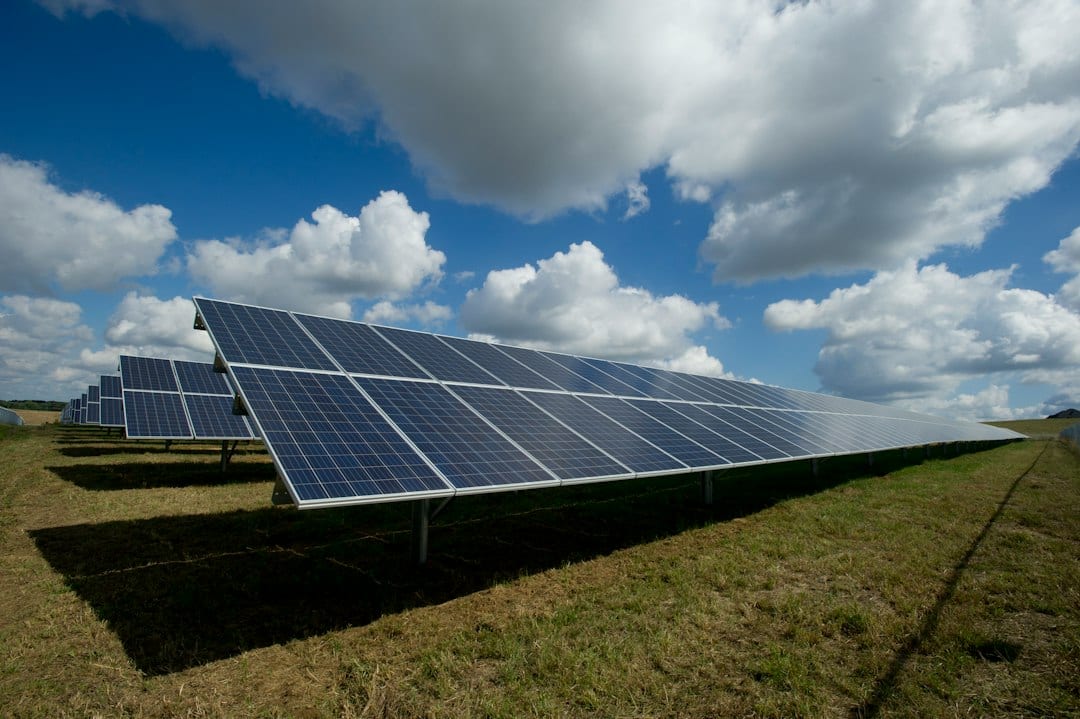
Chelsea is projected to save about $60,000 a year on electricity under a solar deal the City Council approved Monday, Oct. 5. The vote was 7–0, according to Chelsea Massachusetts | 02150 News.
A second, separate solar deal, aimed at low-income households, didn't get through. Councillors voted 4–3 to send it back to committee.
The two deals are easy to mix up. Here's how they differ.
Deal 1: The city's own electricity (approved)
The city will buy net metering credits from 978 Solar Development LLC, a New Leaf Energy subsidiary, for up to 30 years. The deal covers City Hall, the police station, public works and the schools. Projected savings: about $60,000 a year on the city's electricity bills.
This deal isn't tied to the low-income program. When Councillor Todd Taylor asked, City Manager Fidel Maltez answered, "No, sir." He called it "a contract between the city of Chelsea and a solar developer to reduce the city's bills."
Deal 2: Credits for low-income households (sent back)
The second deal would use the state's SMART solar incentive program. Chelsea would sign 20-year agreements with BWC Merriam Brook LLC and Blue Meadow Brook LLC. The credits would pass through Eversource to Chelsea Electricity Choice customers who are already on Eversource's low-income rate.
Maltez said residents qualify automatically through programs such as MassHealth and SNAP. He noted that Chelsea has 10,000 residents on SNAP.
The debate
Councillors pushed back hard, according to 02150 News and the council's meeting transcript.
Taylor, who sat on the subcommittee that reviewed the deals, called the state program "probably the most deceitful piece of legislation that I've ever seen." He said the cost falls on Eversource customers who don't qualify, and that any councillor voting yes "is voting for a tax."
Councillor Manuel Teshe partly agreed that ratepayers subsidize solar. But, Teshe said, "if you want to fight the state, don't do it at the cost of the poor people that do need this program." Teshe also said "we cannot be picking and choosing at this point," pointing to the Flatiron battery plant coming to Chelsea as another state-supported project. Teshe had asked to postpone the vote until all 11 councillors could attend, 02150 News reported.
Councillor Giovanni Recupero said he was "also for fairness and equality for all of us." Councillor Deron Hines said, "I am very conflicted because on one end we do save money for residents under a 20 year contract." He also noted that general taxpayers already pay for the program.
Vice President Norieliz DeJesus, who chaired the meeting, said councillors had asked "very specific questions" at the subcommittee "and now we're finding news that wasn't shared for us."
How the vote went
Instead of postponing, the council passed Councillor Calvin Brown's motion to send the deal back to committee, 4–3. Taylor, Recupero and Teshe were recorded as voting no. Four councillors were absent: Council President Roberto Jimenez-Rivera and Councillors Tanairi Garcia, Kelly Garcia and Leo Robinson. The report didn't name the four yes votes.
An order creating a revolving fund for the program also went back to the Subcommittee on Conference.
What happens if Chelsea says no
If Chelsea declines, Maltez said, Eversource rates stay the same and the benefit goes elsewhere: to "residents in Salem as opposed to residents in Chelsea." He said Salem, Revere and Cambridge are "at the exact same point as we are," each taking the deal to its own council. "Nothing has been executed. Nothing has been signed," he said. Taylor countered that no other municipality has done this yet.
Maltez didn't have every answer. Asked about the 20-year term, he said he didn't know the answer on getting out of the contract, though he believed the city could terminate it and give up the savings. He also didn't know whether Chelsea could join later after saying no. He called the idea of another meeting to answer the hard questions "a really good suggestion."
Background: Chelsea Electricity Choice
The low-income deal is tied to Chelsea Electricity Choice, the city's electricity aggregation program. Eversource still delivers the power and sends the bill. The program sets the price for the supply part of the bill, according to the City of Chelsea's program page. That page, which is marked as archived, also says customers eligible for a low-income rate keep that benefit.
What to watch
The low-income deal is back before the Subcommittee on Conference for the second time. No date for further action was given.
A note on sourcing: the transcript excerpt we reviewed didn't cover the city deal's discussion or vote, so the 7–0 result and the $60,000 figure come from the 02150 News report. The sources also didn't say when the city deal takes effect or how the $60,000 estimate was calculated. |
0 Comments
Join the conversation
Be the first to comment
Share your thoughts above.