
Chelsea Launches Civic Leadership Academy to Bring Residents Inside City Hall |
The free 11-week fall program will give residents a closer look at how local government works — from budgeting and assessments to boards, committees, and community leadership. |
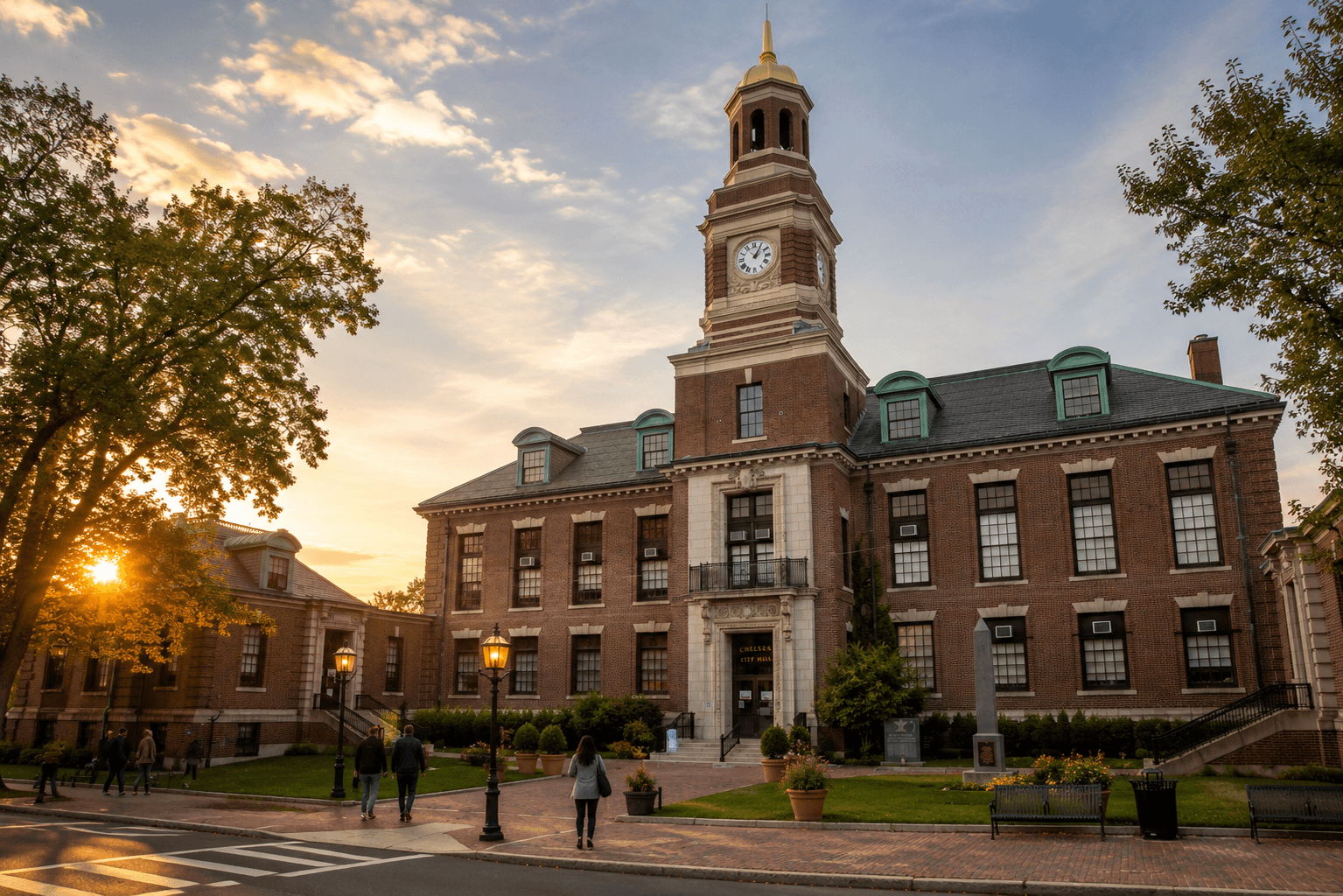
Chelsea residents who have ever wondered how city decisions get made will soon have a new way to learn from the inside. The City of Chelsea is offering its first Civic Leadership Academy, a free 11-week program designed to give participants an up-close look at municipal government and help develop informed, civically minded community leaders. The program was highlighted by WBUR, which described the academy as a behind-the-scenes look at the everyday functions of City Hall — including topics such as road paving, property assessments, budgeting, and human resources.
The academy arrives at a time when many communities are looking for ways to strengthen trust between residents and local government. Devon Fields, Chelsea’s deputy city manager of operations, told WBUR that the city wants to “demystify” how government works. She also pointed to a broader goal: helping more residents feel prepared to serve on boards and committees, volunteer in civic roles, and perhaps even run for public office.
How to apply
Applications for the Fall 2026 class are due by 12 p.m. on Friday, Aug. 14, according to the official application. Applicants will be notified of acceptance by Friday, Aug. 28. The academy is generally limited to 20 participants, and applicants must be current Chelsea residents who will be at least 16 years old by July 1, 2026. The application also notes that preference may be given to registered voters, and that people who work in Chelsea but do not live in the city may also be considered. Residents can apply through the official Chelsea Civic Leadership Academy application.
For a city as active and diverse as Chelsea, the academy could serve as a practical bridge between public questions and public service. Residents often encounter government through a specific issue — a street repair, a tax question, a permit, a public meeting, or a park concern. This program is intended to step back and show how those pieces connect, giving participants a clearer understanding of the systems, departments, and decisions behind day-to-day city services.
The application says classes will take place at various city buildings, and that participants accepted into the academy will receive an orientation packet with session locations. It also notes that translation devices will be available for all classes, an important detail for a city where civic participation depends on making information reachable to more residents. The application says class locations are handicapped accessible, though some building tours may include areas not normally open to the public and may not be fully accessible.
Why it matters
The leadership focus also connects with Chelsea’s existing board and commission structure. The city’s website lists a wide range of civic bodies, including the Affordable Housing Trust Fund, Planning Board, Cultural Council, Human Rights Commission, Youth Commission, Tree Board, Zoning Board of Appeals, and more. In a previous city notice, Chelsea described board and commission members as having an essential role in the decision-making process of local government. Residents can learn more about civic service through the city’s board openings page.
WBUR also reported that Chelsea is not alone in offering this kind of local-government learning program, noting that other Massachusetts communities have held similar civic academies. But for Chelsea, this first class offers something especially local: a chance for residents to better understand the city they live in, ask sharper questions, share more accurate information with neighbors, and become more confident participants in public life.
For anyone who has wanted to understand City Hall beyond headlines, meeting agendas, or social media threads, the academy offers a direct starting point. The program is not just about learning how government works; it is about giving residents the tools to take part in it. |
4 Comments
Join the conversation
Only 20 spots though? That's pretty small for a whole city.
Mike TranYeah but honestly maybe that's intentional? Keeps it more like a real classroom than a big auditorium thing. Hopefully they run it more than once a year if there's demand.
Finally signing up for this. Been complaining about potholes on Spruce Street for two years, maybe now I'll actually understand who to talk to.
Rosa V.Ha, Spruce Street is a mess. Good luck — seriously though, hope you get in. Would love to hear how it goes.