Chelsea Creek’s Long-Closed Forbes Site Moves Toward a New Future |
A long-closed stretch of Chelsea’s waterfront takes a major step toward public access, green space, and new housing. |
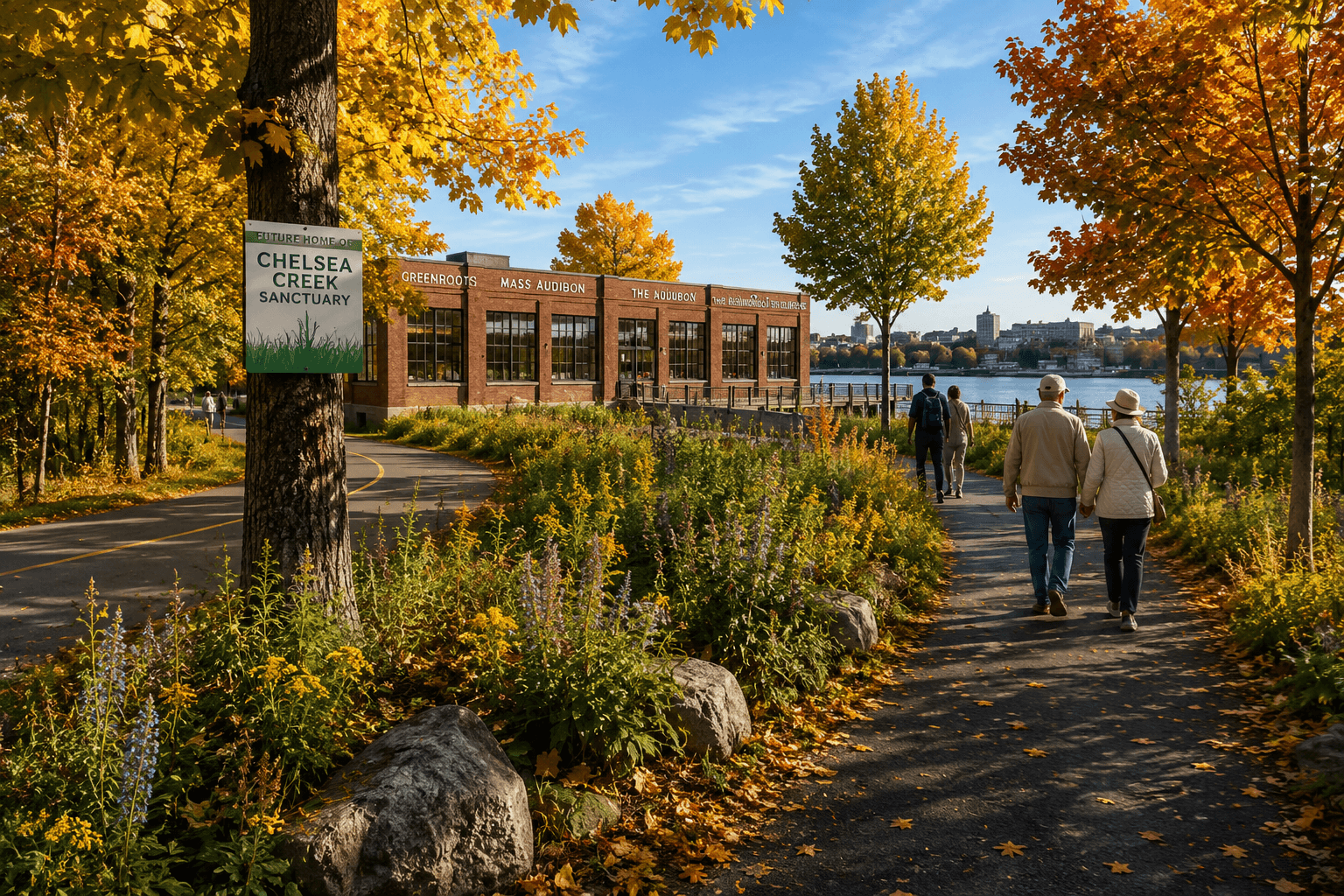
For many Chelsea residents, the Forbes site on Chelsea Creek has long represented something just out of reach: acres of waterfront land, fenced off from the public, carrying both the weight of the city’s industrial past and the possibility of a very different future.
That future took a major step forward this spring, when Mass Audubon officially took ownership of the 18-acre property in partnership with GreenRoots and The Neighborhood Developers. The acquisition, celebrated by the three organizations at the site in late June, marks a milestone in a years-long effort to turn the former Forbes Lithograph Manufacturing Company property into the future Chelsea Creek Sanctuary.
The vision is ambitious and deeply local. Project partners plan to transform the long-abandoned industrial site into a climate-resilient waterfront destination with public open space, restored access to Chelsea Creek and Mill Creek, nature-based programming, community gathering areas, and up to 225 new homes, with partners emphasizing affordability and mixed-income housing as part of the plan.
For Chelsea, the project speaks directly to two needs residents and local leaders have raised for years: more access to green space and more housing options that allow people to remain in the community. Mass Audubon describes the site as a future waterfront park and community asset, while The Neighborhood Developers has framed the project as a way to bring open space and housing together rather than treating them as competing priorities.
The property’s history helps explain why the moment is significant. The land sits where Chelsea Creek and Mill Creek meet and was once home to the Forbes Lithograph Manufacturing Company. According to Mass Audubon, the site has been effectively abandoned and fenced off from the public for almost two decades. In late 2024, it was placed into receivership at the request of the City of Chelsea, creating the legal opening that allowed the partnership to pursue the acquisition.
The Chelsea Record reported that the receiver officially sold the property to Mass Audubon for $8.36 million, while the city was expected to receive more than $1 million in back taxes and liens. The same report noted that the site had seen several residential and mixed-use proposals come close to moving forward over the years, but none fully materialized.
The work ahead will not be quick. Chelsea Creek Sanctuary’s own project information says the site is not currently open to the public because of safety concerns, including abandoned and dilapidated buildings, hazardous materials, and damage from a 2024 fire. The project’s FAQ says demolition and debris removal are planned to begin in 2027, with public access expected only after the site can be made safe.
That careful pace is part of what makes the acquisition more than a ceremonial milestone. Before families can walk trails, children can attend nature programs, or neighbors can reach the waterfront without barriers, the partners will need to address environmental testing, site safety, seawall repairs, damaged structures, and public planning. Mass Audubon has said the broader project is expected to cost about $68 million, including real estate, environmental testing, planning, design, and construction.
The community role will also be central. The Chelsea Creek Sanctuary website says partners will hold meetings to gather input from residents on the programs and recreational features they want to see at the site. That process will matter in a city where waterfront access has often been limited and where environmental justice advocates have long pushed for residents to share in the benefits of public investment.
GreenRoots Executive Director Roseann Bongiovanni has described the acquisition as a win for Chelsea residents who have waited years to reclaim a meaningful connection to the creek. Her point is simple but powerful: future generations should not have to treat the waterfront as something hidden, unsafe, or off-limits.
When complete, the project could bring a rare combination to one waterfront property: restored natural habitat, public access, climate resilience, educational programming, community space, and housing. For a dense urban city with a deep industrial history, that combination is what makes the Forbes site acquisition feel less like a routine land transaction and more like the beginning of a community reset.
For now, the gates are not yet open. But after years of uncertainty, the Forbes site has moved from an abandoned property into a shared civic project. The next chapter will be shaped by cleanup, planning, funding, and—most importantly—the voices of Chelsea residents who have the most at stake in what this waterfront becomes. |
0 Comments
Join the conversation
Be the first to comment
Share your thoughts above.