
Chelsea Begins Central Avenue Reconstruction With Focus on Safer, Longer-Lasting Streets |
The city is using state Chapter 90 funding and capital improvement dollars to rebuild part of Central Avenue and repave a section of Watts Street. |
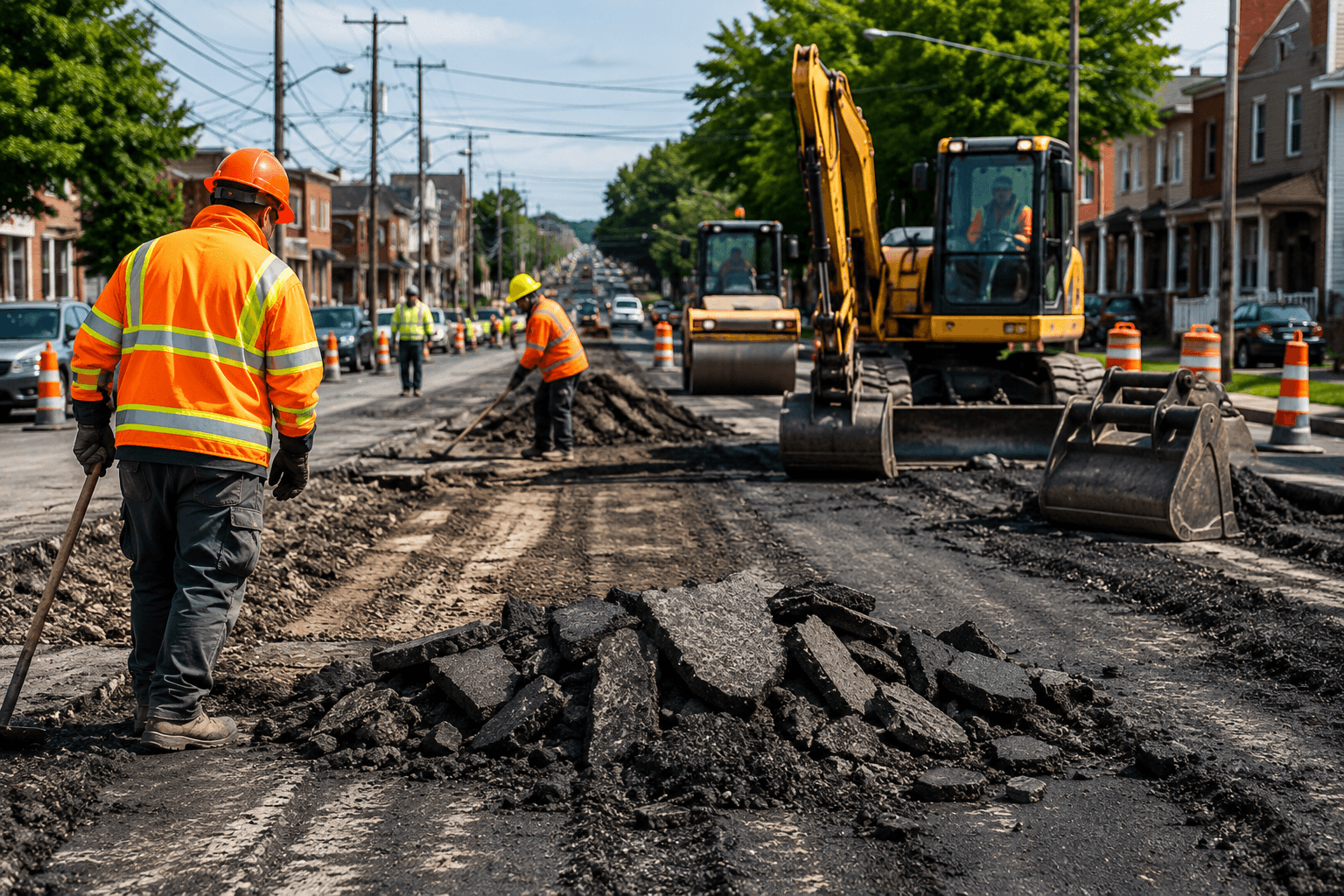
Chelsea drivers, pedestrians, and nearby residents will see construction activity this summer as the city begins a targeted road improvement project on Central Avenue and Watts Street.
The Chelsea Department of Public Works is moving forward with a full-depth reconstruction of part of Central Avenue and repaving work on Watts Street, using $725,000 in Chapter 90 funding from the Commonwealth of Massachusetts as part of the city’s annual paving program. Work was scheduled to begin Thursday, July 16.
The Central Avenue work will focus on the stretch between Hawthorne Street and Shawmut Street. The remaining portion of Central Avenue is expected to be paved in 2027. Watts Street will be paved between Highland Street and Lynn Street.
For residents who use these roads every day, the project is more than a routine resurfacing job. City officials say Central Avenue needs a deeper rehabilitation because of what lies under the surface: hidden cobblestones and portions of old railway infrastructure. Chelsea Public Works Commissioner Cate Fox-Lent said the project will remove layers of concrete and cobblestones, along with sections of railway beneath the road, in order to create a safer and more durable roadway.
That kind of work matters because roads do not age only from what drivers see on top. A street’s foundation affects how long the pavement lasts, how smooth the ride is, how water drains, and how well the road handles daily traffic. In Central Avenue’s case, city officials also cited deformations caused by heavy vehicle volume, making full-depth reconstruction the more durable approach.
The project also reflects Chelsea’s broader effort to prioritize infrastructure investments in a more systematic way. The city says it uses a surface asset management plan that evaluates roadway and sidewalk conditions, safety and accessibility needs, roadway function, multimodal traffic volume, and the age of previous repairs. A citywide pavement and sidewalk management program developed for Chelsea also notes that the city has approximately 48 centerline miles of city-owned streets and that Public Works sought a more data-driven way to allocate future capital improvement dollars.
For residents, the short-term impact will likely be familiar: construction equipment, temporary traffic changes, and parking restrictions in affected areas. City officials said advance notice will be provided to impacted neighborhoods before construction begins.
The long-term goal is a safer, more reliable street network. According to city officials, the Central Avenue and Watts Street improvements are intended to improve roadway conditions, enhance pedestrian safety, increase accessibility, and extend the life of critical transportation infrastructure. The work is funded through a mix of state grant money and Chelsea’s Capital Improvement Program funds.
Chapter 90 is one of the main tools Massachusetts communities use for local road and bridge work. The state describes the program as annual formula funding for cities and towns to make transportation infrastructure improvements, while MassDOT guidance describes Chapter 90 as funding for capital improvements on local public roadways.
Chelsea’s larger Capital Improvement Plan also provides useful context for this project. The city released a Fiscal Years 2026–2030 CIP outlining strategic investments in infrastructure, open spaces, and public facilities. City Manager Fidel Maltez described those capital investments as part of sustaining Chelsea’s quality of life and long-term prosperity.
The Central Avenue reconstruction may be disruptive while work is underway, but it is also the kind of behind-the-scenes municipal project that residents feel every day once it is complete. Better road foundations, smoother pavement, safer pedestrian access, and more durable street repairs all contribute to a city that is easier to travel through, whether people are walking, driving, biking, taking transit, or doing business nearby.
For now, residents and commuters near Central Avenue and Watts Street should watch for city notices, plan for temporary delays, and pay close attention to posted parking and traffic changes. The work is part of a longer infrastructure strategy: fix the most important problem areas now, build streets that last longer, and keep Chelsea’s transportation network working for the people who rely on it every day. |
1 Comment
Join the conversation
Glad to see Watts getting some attention too. I drive that stretch every day and the bumps have gotten worse. The cobblestones under Central Ave are wild—I had no idea those were still down there! I just hope the timeline doesn't slip too much past summer. Anyone know if sidewalks will be fixed up at the same time?