
What We Know and Don't Know About Chelsea's License Plate Readers |
Volunteers have documented 14 automated cameras in the city, but official policies on data retention, access, and oversight remain unclear |
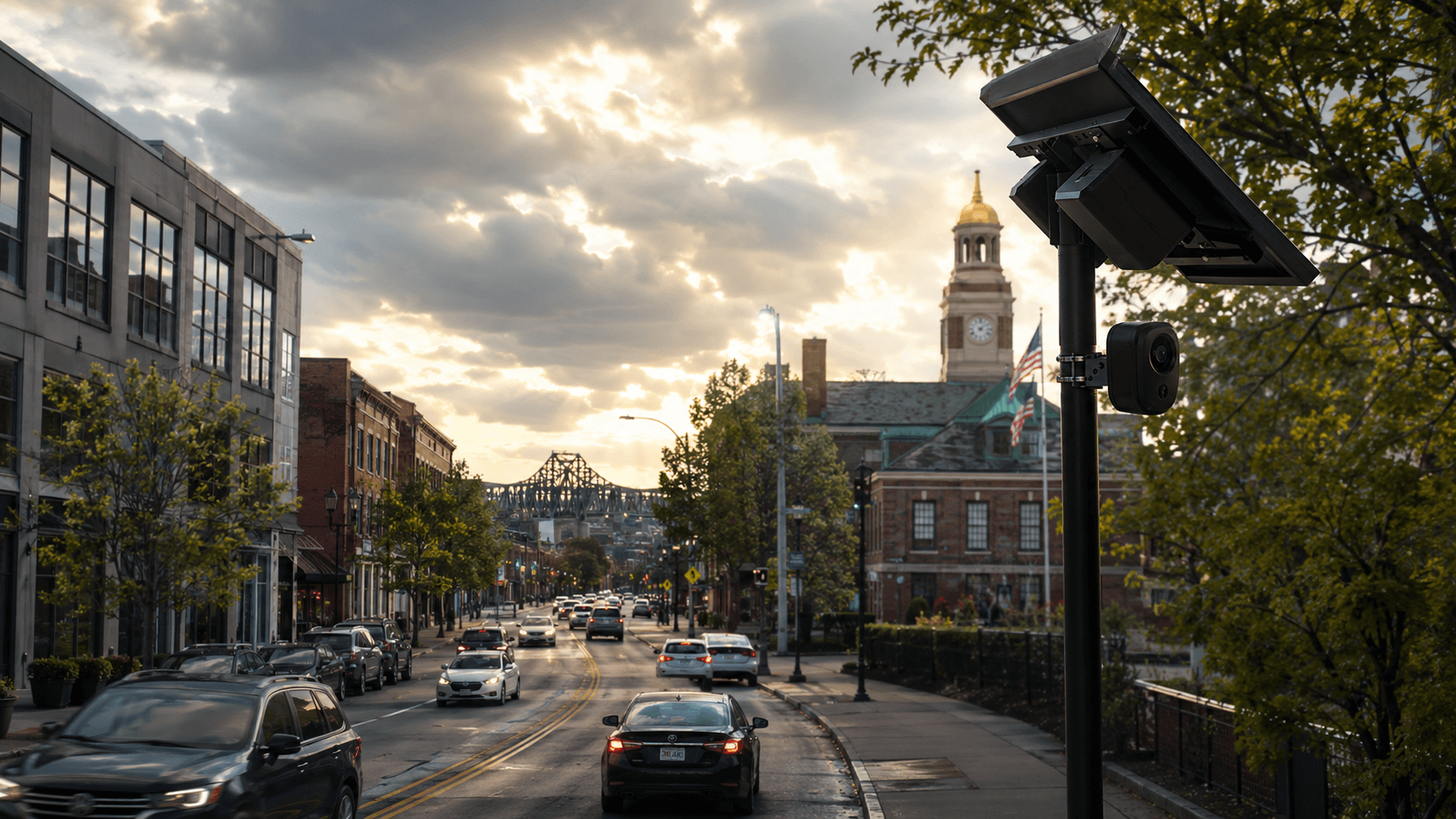
In an era of increasing surveillance, Chelsea residents have limited information about how their movements are being tracked. According to crowdsourced data, 13 automated license plate readers now operate within the city's 2.2 square miles—giving Chelsea one of the densest concentrations of this technology in Massachusetts. Yet basic questions about who controls the data, how long it's stored, and what safeguards exist against misuse remain unanswered by city officials.
The cameras, documented by volunteers at FindingFlock, are predominantly manufactured by Flock Safety, a Georgia-based company whose contract surveillance systems have come under intense scrutiny across the state. Twelve of Chelsea's 13 documented cameras are Flock units, with one camera's manufacturer unidentified. Nine cameras are attributed to Chelsea Police, four to The Home Depot.
At 5.9 cameras per square mile, Chelsea's coverage exceeds 92 percent of the 2,319 U.S. cities indexed by the volunteer mapping project. Only 27 Massachusetts municipalities have higher documented counts, placing Chelsea in the top tier of surveilled communities statewide.
But the FindingFlock data comes with an important caveat: it is crowdsourced, not official. Volunteers from the OpenStreetMap community have documented these locations through field observation, meaning the inventory may be incomplete, outdated, or include cameras that have since been removed. The Chelsea Police Department has not published an official camera inventory, contract details, or usage policies in response to public records requests or media inquiries.
What is known about Flock Safety systems—based on reporting from dozens of Massachusetts communities and investigations by civil liberties organizations—raises significant questions that Chelsea officials have yet to address publicly.
Flock operates a nationwide sharing system that can make locally collected plate data available to thousands of other law enforcement agencies. According to the ACLU of Massachusetts, more than 80 police departments in the state have Flock contracts, and the company's network spans nearly 7,000 communities. Civil-liberties groups have documented cases in which local police conducted Flock searches on behalf of federal immigration authorities, raising concerns about whether locally collected data can indirectly support immigration enforcement.
This cross-sharing capability has become a flashpoint in the debate over automated license plate readers. Massachusetts law restricts local police from collaborating with federal immigration enforcement, but the networked nature of Flock's system creates potential pathways for data to reach federal agencies. While Flock states that ICE has no direct access by default, the documented cases of local police conducting searches on behalf of immigration authorities demonstrate how the system can still facilitate enforcement activities.
The state's highest court has recognized the privacy implications. In a 2020 ruling, the Massachusetts Supreme Judicial Court held that "with enough cameras in enough locations, the historic location data from an [LPR] system in Massachusetts would invade a reasonable expectation of privacy and would constitute a search for constitutional purposes." Despite this, no state or federal statute currently governs police use of automated license plate readers in Massachusetts.
Recent months have seen a wave of Massachusetts communities terminating, suspending, or declining to renew their Flock contracts amid concerns about data access, retention, and misuse. Several communities—including Salem, Littleton, Douglas, Grafton, East Bridgewater and Stow—have moved to end their relationships with Flock, while New Bedford has temporarily suspended its system pending review.
The concerns are not merely theoretical. Two Lynn police officers were placed on administrative leave in August after an audit found a "concerning pattern" of searches potentially used to track individuals for personal reasons. A New Bedford officer faces accusations of using the system to track an ex-girlfriend. At least four Massachusetts officers are currently under investigation for misusing license plate reader technology.
Flock Safety has defended its systems, noting that audit capabilities helped identify the alleged abuses in Lynn. The company has also stated that it does not share specifics regarding individual agency contracts, camera counts, or deployments.
Questions for Chelsea Officials
For Chelsea residents, the critical questions remain unaddressed:
How long does the city retain license plate data? Chelsea's retention period is unknown. Flock historically used a 30-day default and many existing agencies still do, although the company announced in August 2026 that it is moving its recommended default to seven days.
Who can access Chelsea's data? Can officers search without supervision? Are searches audited?
Does Chelsea restrict data sharing with outside agencies? Specifically, has the city opted out of Flock's national network or restricted access by immigration enforcement?
What did the Flock contract cost taxpayers? Most municipal contracts run thousands of dollars annually per camera, but pricing varies and Chelsea has not disclosed its agreement.
What oversight exists to prevent the kind of misuse documented in Lynn and New Bedford?
The Chelsea Police Department did not respond to inquiries for this article. City procurement records do not appear to include the Flock contract in publicly accessible databases.
What is clear is that Chelsea has invested significantly in automated surveillance technology without corresponding transparency about how that technology is governed. With communities across Massachusetts reevaluating their relationships with Flock Safety, Chelsea residents are left to wonder whether their city's policies align with their values—and whether anyone is watching the watchers. |
1 Comment
Join the conversation
There is a new tower located in Polonia Park , the Waterfront.The park is being renovated but that was Not shown in the original renovation plan . There appear to be 3 brackets on it …for future cameras ?? This is Not a dangerous part of town and I do not like the idea that it will spy on us .