
Cyclospora Cases In Massachusetts Hit A Decade High As Lettuce Recall Investigation Continues |
The recalled Taylor Farms iceberg lettuce is off the shelves, but the investigation isn't closed — and Massachusetts case counts have climbed higher than they've been in years. |
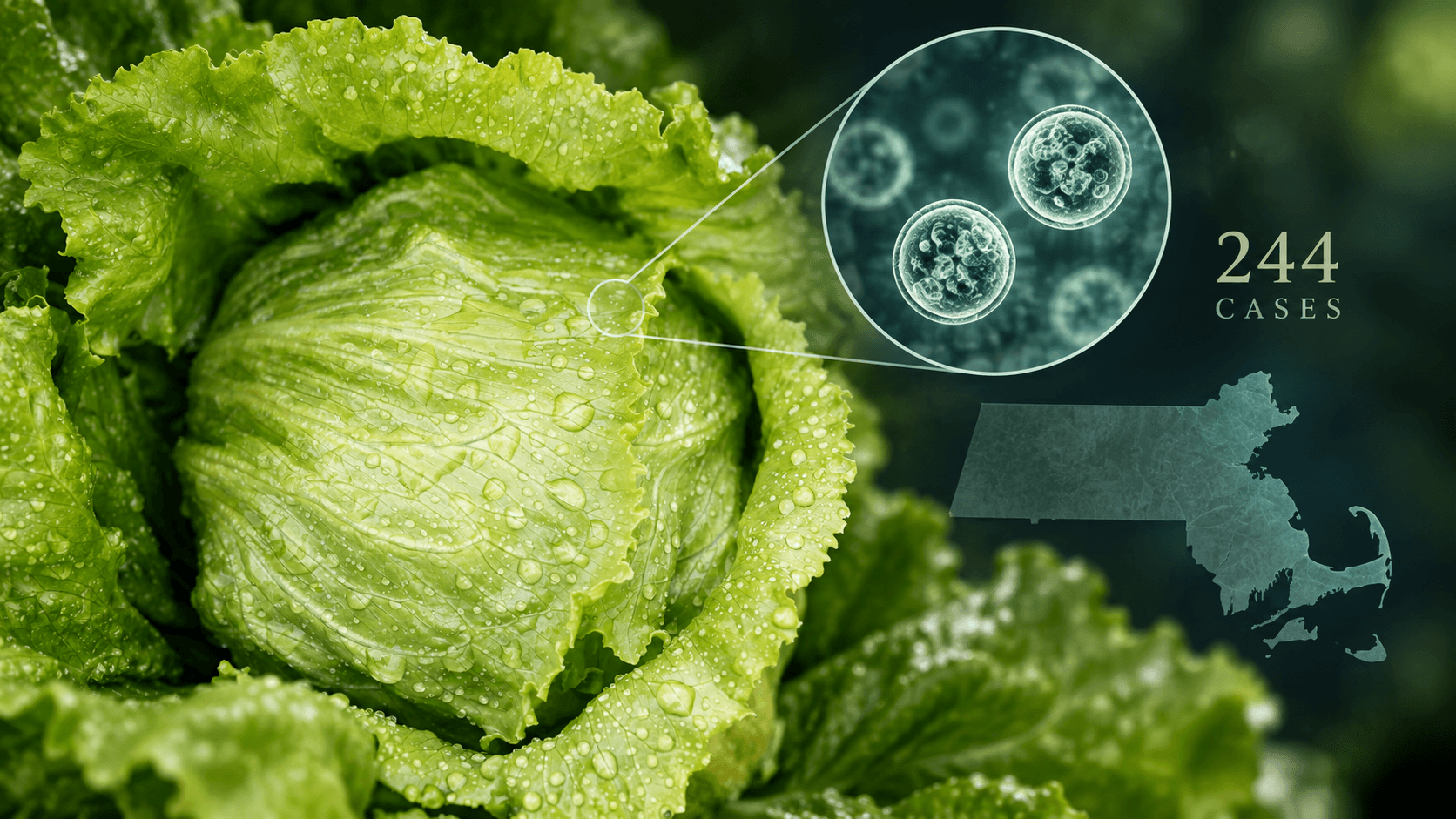
Massachusetts has now logged 244 cases of cyclosporiasis this year, according to the state's Department of Public Health — more than in any year over the past decade, and higher than 2019's previous record of 211. The count, updated September 1, is a sharp jump from the 147 cases reported just a month earlier.
The rise comes as federal officials investigate a multistate outbreak tied to iceberg lettuce from Taylor Farms de Mexico, a processor based in central Mexico. Taylor Farms recalled the product on July 17 after health officials traced illnesses back to it, and the recall covered iceberg lettuce sold at retail stores and served at restaurants, including Marketside iceberg lettuce sold at Walmart. Massachusetts was among the states where the recalled lettuce reached food-service locations.
Not every Massachusetts case is necessarily connected to this specific recall, though. State epidemiologists have identified a handful of small clusters among Massachusetts residents with apparent links to the recalled lettuce, but cyclosporiasis case counts shift from year to year regardless of any single outbreak, and DPH has said it's still working through which of this year's cases trace back to which source.
Nationally, the outbreak has sickened at least 11,458 people across 20 states, according to the CDC's latest update. At least 495 people have been hospitalized, and two have died — both in Michigan, both with underlying health conditions. The CDC says it's now slowing the pace of its public updates as new cases decline.
Here's the distinction worth understanding: the recall itself has effectively expired. The FDA says the "best by" dates on the recalled lettuce have passed, and the product should no longer be available anywhere. But the investigation into how the contamination happened in the first place is still open, with the FDA continuing inspections at growing operations in Mexico. Food-safety experts say that distinction matters for what's on shelves today — iceberg lettuce currently for sale isn't the recalled product, and experts told CNN this week that eating it now carries the same everyday risk as any raw produce, not the elevated risk tied to the recalled batches.
That everyday risk is still real, though, and it's a good moment for a produce-safety refresher. Cyclospora is a hardy parasite, and rinsing produce under running water helps but doesn't guarantee it's gone — the FDA is explicit that washing alone can't be counted on to remove it. Skip the soap, bleach, and commercial produce washes; cyclospora can resist chlorine-based sanitizers, and soap or detergent can soak into porous produce and make people sick instead. For leafy greens, discard the outer two or three leaves and rinse what's left thoroughly. Firm produce like cucumbers and melons should be scrubbed with a clean brush, since a knife can drag contamination from the surface into the part you eat. Cooking to at least 158 degrees is the only method that reliably kills the parasite, and any cut, peeled, or cooked produce should go into the refrigerator within two hours.
Cyclosporiasis symptoms — watery, sometimes explosive diarrhea, along with cramping, nausea, and fatigue — typically show up about a week after exposure, though it can take as little as two days or as long as two weeks. Left untreated, it can drag on for a month or more, but it responds well to antibiotics. Anyone who suspects they got sick from food eaten outside their own kitchen is encouraged to report it to their local board of health, which shares that information with the state epidemiologists tracking exactly the kind of pattern behind this year's numbers. |
0 Comments
Join the conversation
Be the first to comment
Share your thoughts above.