Downtown Broadway Rebuild: What Chelsea Residents Should Expect at Bellingham Square |
A fully signalized Bellingham Square, two-way traffic beside City Hall and back-in parking on Washington Avenue are planned, with construction expected to start in 2027. |
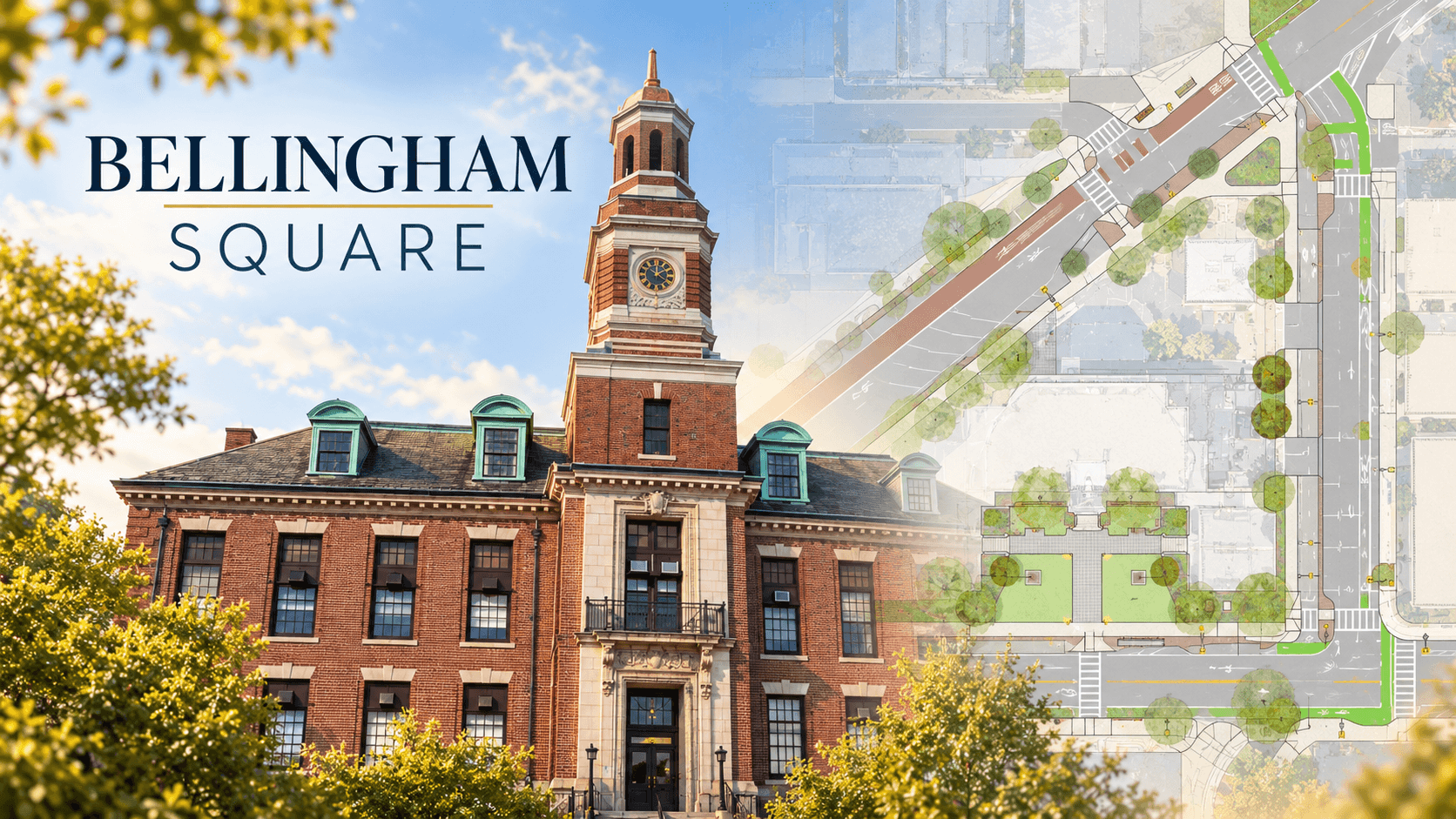
Downtown Broadway is heading for a major rebuild. Plans presented to the Planning Board on September 22 call for a fully signalized Bellingham Square, two-way traffic on the stretch of Broadway beside City Hall, and back-in parking on Washington Avenue. Ben Cares, the city's director of housing and community development, walked the board through the layout, and chelseamass.net's account of the meeting is the source for the street-by-street details below. Here is what they mean for driving, parking, walking and riding the bus.
Driving
At Bellingham Square, all vehicles will stop for the signal, and a pedestrian signal will give people on foot a protected crossing. Turning options widen, too. The city's project page says the redesign will allow left turns from Hawthorn Street to Fifth Street.
Beside City Hall, the block of Broadway near Grove, Shurtleff and Marlborough streets will carry traffic in both directions. That means drivers no longer have to circle City Hall to reach other parts of town, and traffic coming in from Revere can stay on Broadway. Along with the signal, the change is expected to ease congestion on Washington Avenue.
From City Hall to Second Street, Broadway stays one-way with two lanes moving the same direction. A two-way option was studied and dropped. Third Street and Broadway will get a signal, while Fourth and Second streets will not. Fay Square, where City Hall Avenue meets Washington Avenue by the fire station, will be reworked into a one-lane layout. One movement drivers shouldn't count on is Washington Avenue to Fifth Street, which won't be possible because of a conflict with buses.
Parking
Washington Avenue already has parallel spaces. The city's case for back-in parking is that it is essentially the same maneuver, done faster, and that it makes room for more spaces around City Hall. Across the whole project, the net change is a gain of one space.
Walking, biking and riding the bus
Sidewalks and roadway will be torn out and rebuilt to full depth. Curb bumpouts will shorten crossings, rapid flashing beacons are planned where possible, and new street trees will line the corridor. Rebuilt bus stops are designed for buses to pull in and lower for riders who use wheelchairs. The bus and bike lane stays, bike facilities return on Williams and Congress streets, and Winnisimmet Street gets a wider pedestrian plaza.
Near Bellingham Square, the slip lane by the Dunkin' off Washington Avenue will be closed and turned into plaza space. The landscaped area around the statues will be rebuilt as flat, flexible space for seating, public art and events. The rose bushes on the Broadway side stay, and the brick there becomes pavers.
The timeline and funding
The city has called the two-phase Downtown Broadway Project its biggest beautification and utility effort on the corridor in 50 years. Its October 2025 announcement said the first phase, underground utility work, began in June 2024 and that MassDOT would launch the surface phase in 2027. City Manager Fidel Maltez said in his February State of the City address that the city was taking a break from construction in 2026, the Chelsea Record reported.
Design is complete, Cares told the board, and MassDOT will handle the bidding. He cautioned that the work will proceed in stages rather than disrupting the whole corridor at once, with the city coordinating with businesses through the chamber to limit the impact. On funding, Maltez's letter to the City Council describes the project as more than $14 million in federal investment.
Property owners and businesses
Surveys can show that the legal right of way sits somewhere other than the back of the sidewalk. Where that happens, the city needs temporary or permanent easements to build. MassDOT's 2023 hearing notice said acquisitions or easements might be required and that the city is responsible for securing them. Under the presentation, affected owners are owed compensation set through an appraisal process, with the Federal Highway Administration overseeing the right-of-way work.
For businesses, the city points to CDBG grants, technical assistance and its storefront improvement program. Direct payments for construction impact are rare, and creating a fund would be a decision for the City Council and city manager.
What happens next
The Traffic and Parking Commission has approved the plan, and it now returns to the City Council for a public meeting and a final vote on the street layouts. A community meeting to brief residents was scheduled for Wednesday, September 23, at 6 p.m. at the Chelsea Senior Center, 10 Riley Way. Questions about construction and traffic go to Chelsea 311 at 617-466-4209. |
0 Comments
Join the conversation
Be the first to comment
Share your thoughts above.