
Markey and Pressley Push for $25 Billion in Federal Fare-Free Transit Funding |
New report shows Massachusetts fare-free transit success with ridership up 14% while national transit ridership declined 19% |
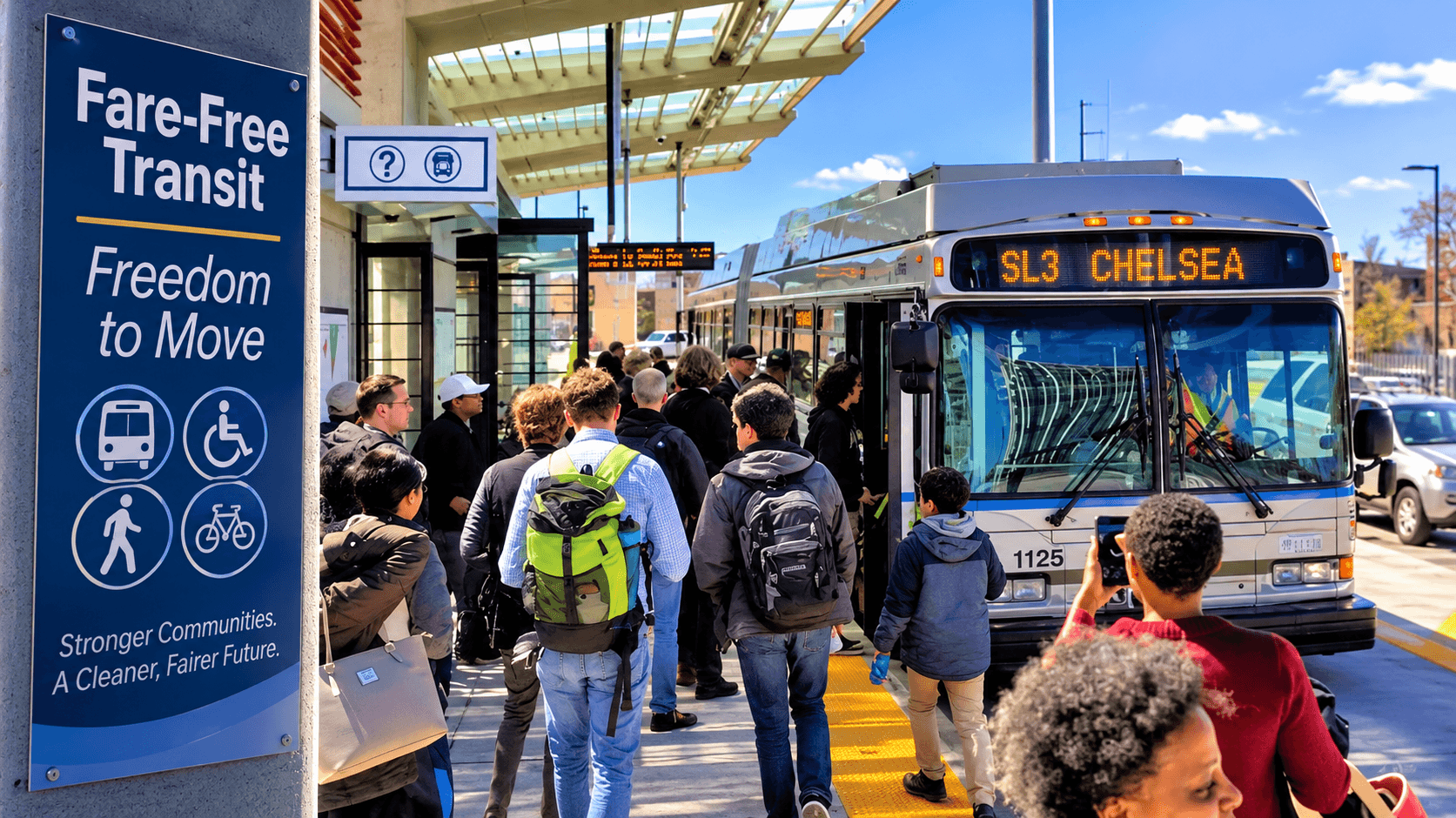
Senator Ed Markey and Representative Ayanna Pressley are making a major push to bring fare-free public transit to communities across America—and they're using Massachusetts as the proof of concept. The lawmakers released a new report on August 3, 2026, detailing the success of fare-free programs in the Commonwealth and calling for $25 billion in federal funding to expand the model nationwide.
The report, titled "Making Transit Free, Frequent, and Reliable: Massachusetts shows the need for federal investment in fare-free transit," makes a compelling case. While public transit ridership has dropped 19% nationally since the pandemic, Massachusetts regional bus ridership has actually increased 14% from pre-pandemic levels. Fare-free service, combined with expanded operating support and service improvements, has been a major contributor to that growth.
The Freedom to Move Act
Markey and Pressley are lead sponsors of the Freedom to Move Act, legislation that would provide $25 billion over five years to help communities eliminate transit fares and expand service. The bill, originally introduced in 2020 and reintroduced in July 2025, has gained support from Senator Elizabeth Warren and numerous House colleagues.
"From Worcester to Boston to the Merrimack Valley, Massachusetts is showing the nation what is possible when transit goes fare-free," said Senator Markey. "Our report shows that fare-free transit saves families money, increases ridership and helps make transit easier and simpler for passengers."
Representative Pressley, who represents Chelsea as part of Massachusetts's 7th congressional district, emphasized the equity implications. "The data doesn't lie and this report makes plain what we've long known: fare-free transit is essential to building connected communities, improving mobility, and making life more affordable for our families," said Pressley, Co-Chair of the Future of Transportation Caucus. "Transit equity is an economic, racial, and climate justice issue."
Massachusetts: A National Leader
Massachusetts has become a testing ground for fare-free transit. The City of Boston and the MBTA have extended fare-free service on Routes 23, 28, and 29 through the end of 2026. Meanwhile, all 15 of the state's Regional Transit Authorities now provide year-round fare-free fixed-route service, supported by $35 million in state funding.
The results have been striking. According to the report, fare-free transit:
What This Means for Chelsea
For Chelsea residents, the push for federal fare-free transit funding could have significant implications. As part of Pressley's district, Chelsea is directly represented by one of the legislation's chief architects. The city relies on MBTA bus service and connections to the Silver Line and Blue Line for access to Boston and surrounding communities.
Eliminating transit fares would put money back into the pockets of Chelsea families who depend on public transportation for work, school, healthcare, and daily errands. It would also align with broader environmental goals—more transit riders means fewer cars on the road, reduced emissions, and cleaner air for communities like Chelsea that already face environmental challenges.
The Road Ahead
The Freedom to Move Act faces an uphill battle in a Republican-controlled Congress. However, Markey and Pressley are betting that the Massachusetts success story will build momentum for the proposal. With ridership up, families saving money, and transit systems proving that fare-free service can work, the lawmakers hope to convince colleagues that public transportation should be treated as a public good—accessible to everyone, regardless of ability to pay.
For now, Massachusetts continues to lead by example. And for Chelsea residents watching their representatives in Washington, the message is clear: when it comes to transit equity, the fight is on. |
0 Comments
Join the conversation
Be the first to comment
Share your thoughts above.