Revere Moves Forward with Cleanup of Contaminated Former Boatyard for Public Waterfront Access |
Phase 2 of Gibson Park project aims to remove 1,600 tons of contaminated soil and create new community boating center |
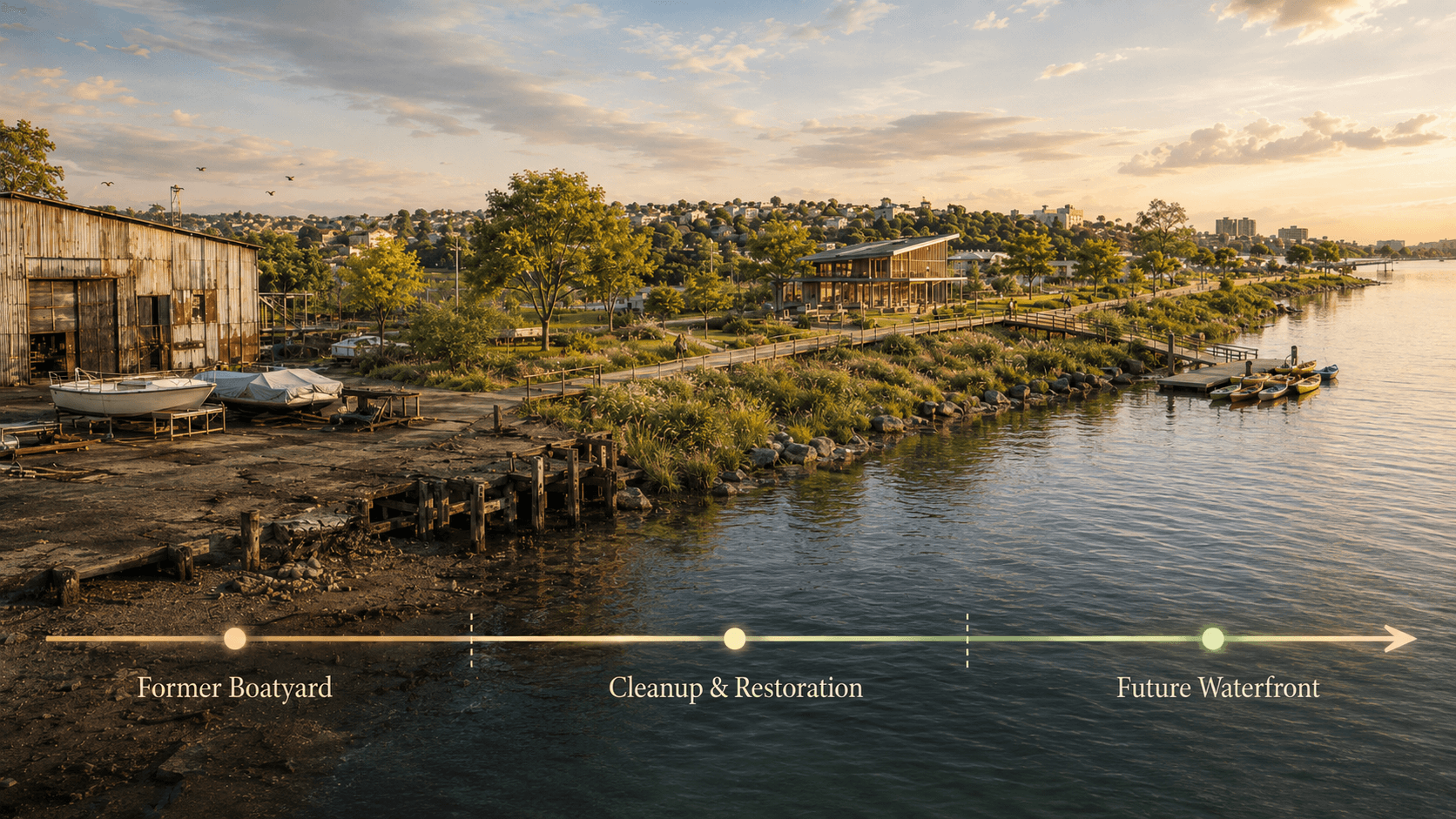
Revere's plan to transform a contaminated former boatyard into public waterfront space took another step forward this month, offering a glimpse of what environmental remediation and climate-conscious development can look like for neighboring communities like Chelsea, MA.
At an August 5 meeting, the Revere Conservation Commission reviewed Phase 2 plans for the Gibson Park project at 29 Thayer Avenue—the site of the former Riverside Boatyard. The property, which the city purchased in 2021, has tested positive for PCB and chromium contamination left by decades of industrial use.
The Cleanup Plan
According to Elle Baker, Revere's Open Space and Environmental Planner, the remediation will involve excavating approximately 1.5 feet of contaminated soil—about 1,600 tons total—and trucking it to an appropriate disposal facility. Workers will then bring in roughly 3,000 cubic yards of clean fill material to restore the site.
"The vision for this contaminated site is to have this cleaned and transformed into a space for all residents of all ages and abilities to enjoy access to the waterfront," Baker told commissioners.
Clair Hoogeboom, a wetlands scientist with LEC Environmental who has worked on the Gibson Point project from its inception, presented photos showing the site's current condition. She noted that contamination levels exceed both state and federal permissible limits for PCBs, necessitating the extensive excavation.
What's Coming Next
Once remediation is complete, the city plans to build a new community boating center elevated on pilings, along with a fixed pier extending into the Pines River. The pier will connect to a ramp and seasonal floating dock, giving residents access for canoeing, kayaking, paddle boarding, and rowing.
The overall plan also includes 27 parking spaces, paved walkways, a boardwalk, a rain garden, an open lawn area, and a net increase of 25 trees. The site is considered a coastal barrier beach and is protected as a coastal dune, adding environmental significance to the restoration work.
Regulatory Holdup
Despite the detailed presentation, the Conservation Commission could not vote on approving the Notice of Intent for Phase 2. The Massachusetts Department of Environmental Protection has not yet issued the required file number—a prerequisite before local conservation commissions can take action on wetland applications.
Commissioners continued the matter to their September 2 meeting, by which time the file number should be issued. The public will have an opportunity to comment on the proposal before commissioners take a vote.
Why Chelsea Residents Should Care
Revere's waterfront remediation efforts parallel similar initiatives underway in Chelsea, where the city and environmental partners are advancing multiple climate resilience and waterfront access projects.
Chelsea's Island End River floodplain—part of the working waterfront shared with Everett—has been identified as a critical priority in the state's new ResilientCoasts Plan. The plan recognizes that protecting this area safeguards thousands of residents, billions in economic activity, and the region's food supply from rising seas and extreme weather.
Meanwhile, the Chelsea Creek Waterfront Project broke ground with a public walkway connecting Eastern Avenue to a new observation area along Chelsea Creek. Mass Audubon, GreenRoots, and The Neighborhood Developers are also working to transform 18 acres of formerly industrial waterfront into the Chelsea Creek Sanctuary—a climate-resilient park with mixed-income housing.
Both cities face similar challenges: industrial contamination, rising sea levels, and the need to balance working waterfront needs with public access. Revere's progress at the former boatyard offers a model for how contaminated sites can be reclaimed for community benefit.
The next Revere Conservation Commission meeting is scheduled for September 2, where commissioners expect to take public comment and potentially vote on the Phase 2 remediation plan. |
0 Comments
Join the conversation
Be the first to comment
Share your thoughts above.